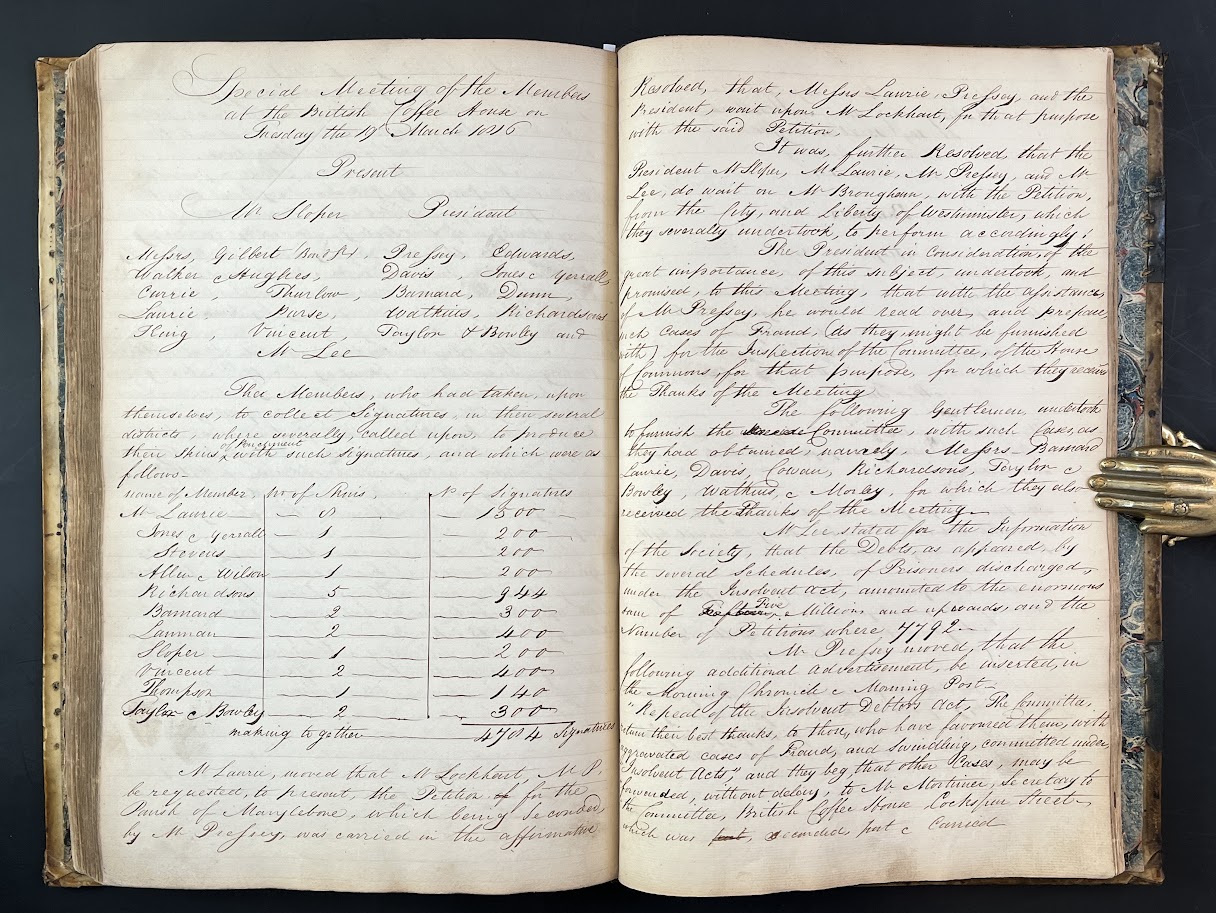
Unpublished records of a secretive early 19th century precursor of the modern credit ratings industry. The Society of Mutual Communication for the Protection of Trade was founded in order to allow London business men to spot deadbeat clients, share information between businesses as well as managing debt recovery from failed transactions. This vellum-bound set of Minutes of this trade protection society covers the years 1803-1816 when London was emerging as the world’s pre-eminent trading city; it reveals the lobbying campaigns undertaken by the Society (notably around legislation on debtors) as well as the inner workings and, crucially, membership of this secretive trade organisation.
DESCRIPTION:
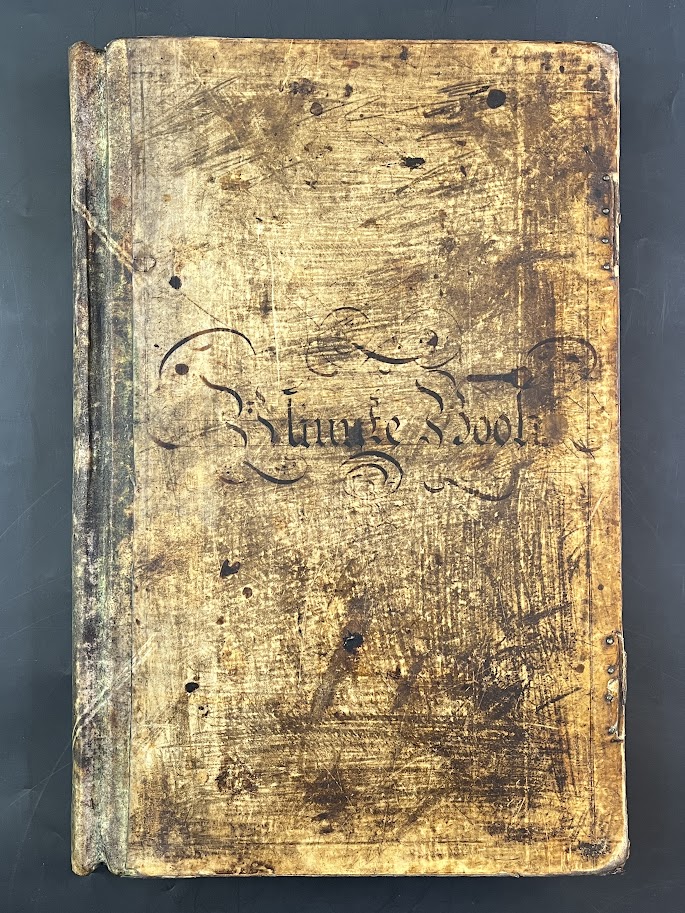
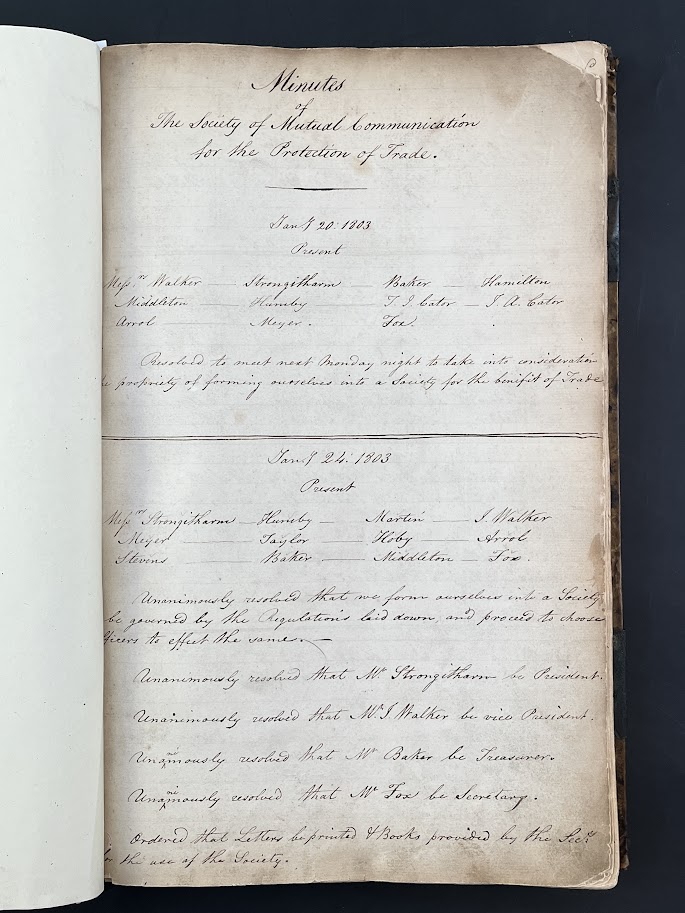
Large folio, (37x26cm) contemporary vellum, recently respined. ‘Minute Book’ in a calligraphic hand to the upper board; marbled endpapers; manuscript title-page laid down: ‘Minute Book Commencing January 20th 1803’ with entries continuing to November 18, 1816 recording biweekly then monthly meetings throughout. [pp] 240, ‘W Martin 1796’ watermarked paper, c25,000 words.
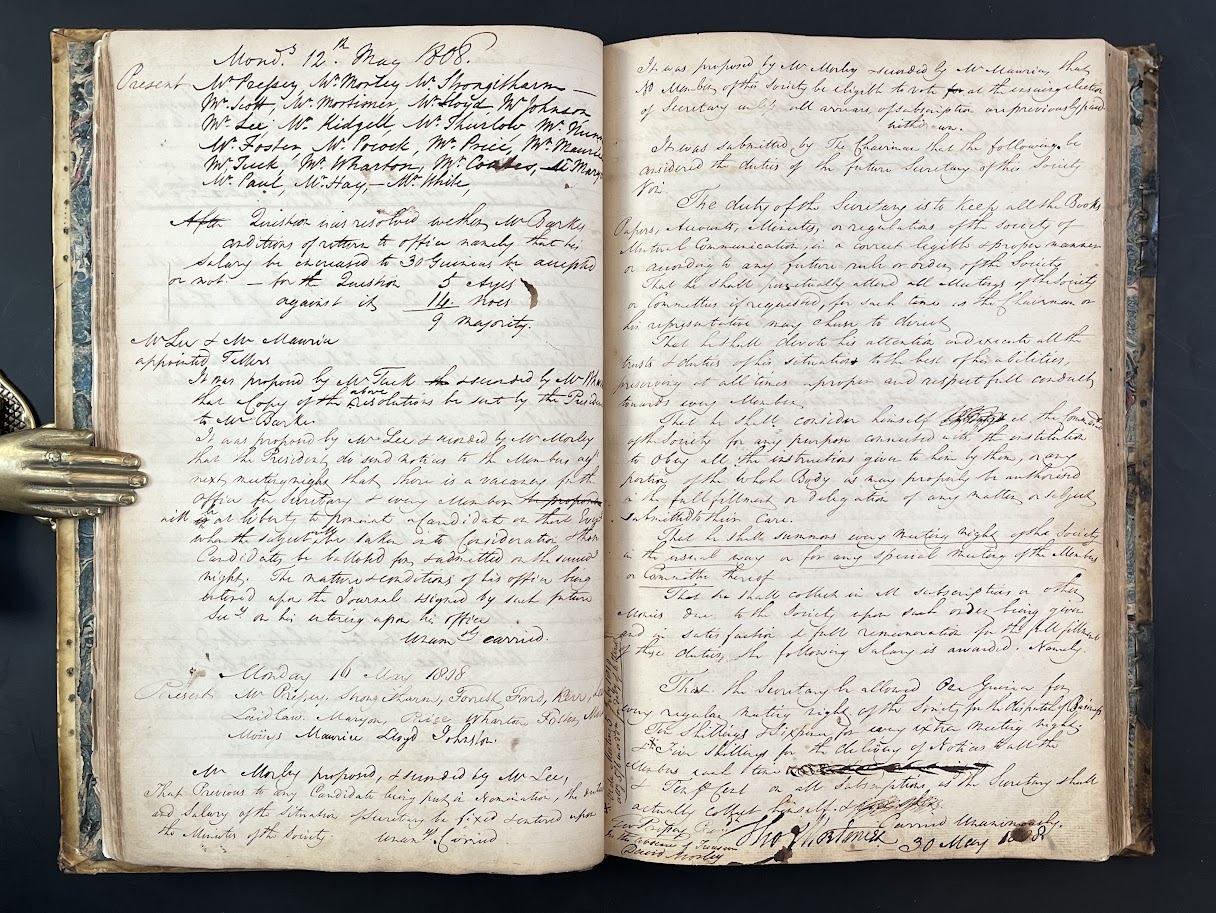
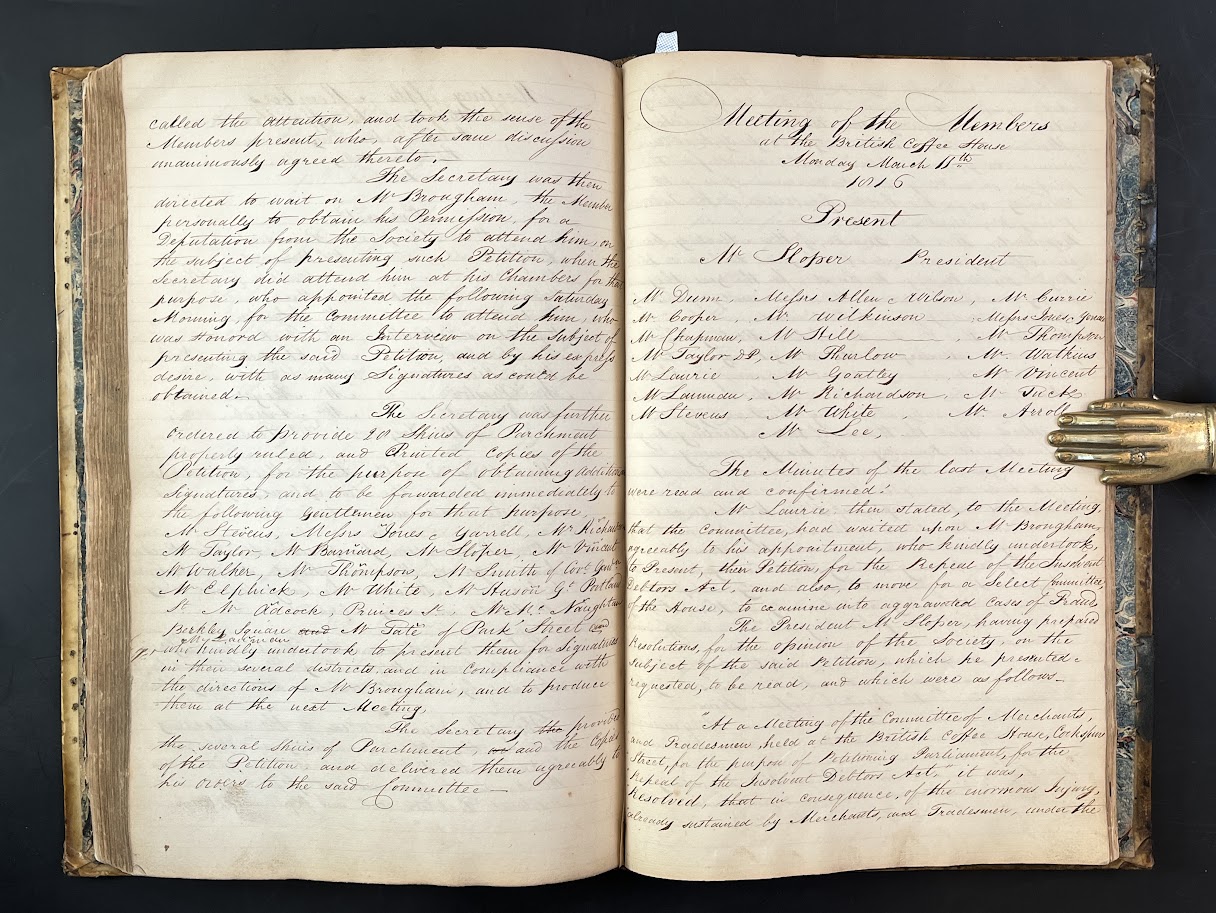
NARRATIVE: At the first meeting those present determined ‘to take into consideration propriety of forming ourselves into a Society for the benifit[sic] of Trade’ which happened on January 24, 1803 under the Presidency of John Strongitharm and with the election of the usual officers who ‘Ordered that Letters be printed and Books provided by the Sec.y for the use of the Society’ - no doubt including this manuscript volume. John Strongitharm (1759-1839) was engraver to the Prince of Wales working out of Pall Mall and presided over all the early meetings of the Society, receiving the gratitude of the society for ‘applying to Lord Eldon to prevent the arrests being extended to £20 as proposed by Lord Moira by his [Insolvent Debtors’] Bill now pending in Parliament’ (March21, 1803). The Society settled into meeting first at the ‘London Coffee House’ then alternating between the Cannon Coffee House (Cockspur Street) and the City Coffee House. Over time the Minutes deal with membership and subscriptions, annual dinners and elections of senior officers, but also several lobbying campaigns and Petitions to Parliament. The manuscript is also a compelling record of London’s business classes as the membership waxes and wains: ‘Mr King proposed Mr Henry Holt of the Belle Sauvage Inn Ludgate Hill to become a Member’ (10.4.1815).