RESERVED A richly provenanced volume with 18th century copies of Jonathan Swift’s acerbic annotations made in response to Macky’s characters of the great and good.
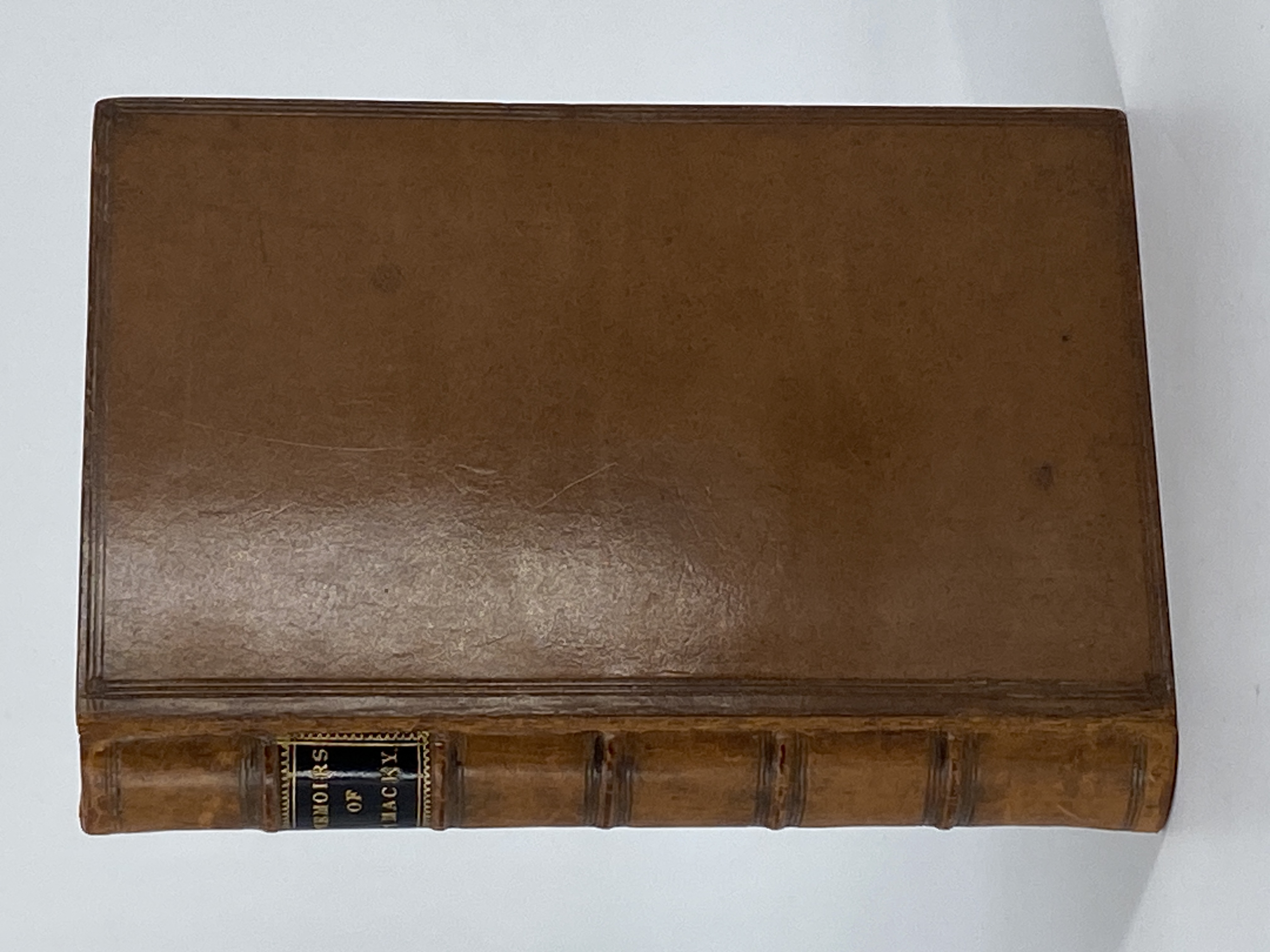
Small octavo in polished calf with marbled endpapers. Collates [8] lvi, p254, xviii, [pp] 8. As noted in one of the provenance remarks on the book, it has been damaged in a fire and every single leaf has then had the lower, outer corner painstakingly repaired. A crisp, attractive copy.
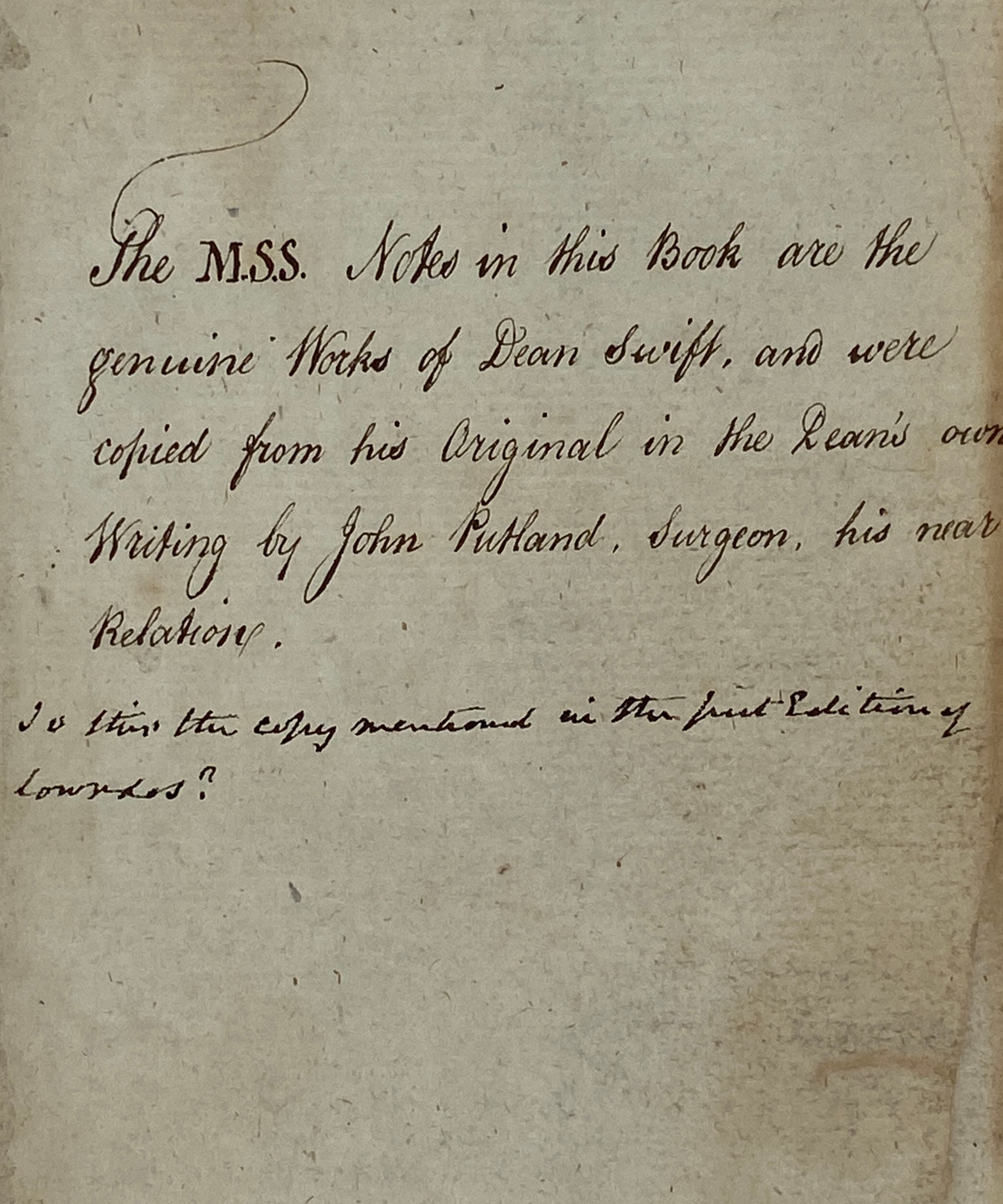
PROVENANCE Annotated to second flyleaf: ‘The M.S.S. Notes in this Book are the genuine Works of Dean Swift, and were copied from his Original in the Dean’s own Writing by John Putland, Surgeon, his near Relation.’ Below this is written ‘Is this the copy mentioned in the First Edition of Lowndes?’ Opposite on the verso of the first flyleaf ‘I bought this at the sale of Duke of Buckingham Library from Stowe. The notes make it valuable. Paid £1-18-’ (1849) with the circular book label of William Twopeny and below that ‘Bought at Sale of the late William Twopeny’s Library sold at Sothebys May 26th to 29th 1902.’ Two additional pages bound in after ‘Finis’ which contain further separate manuscript transcripts, or ‘Copies of the M.S. notes in this book which are injured by fire.’
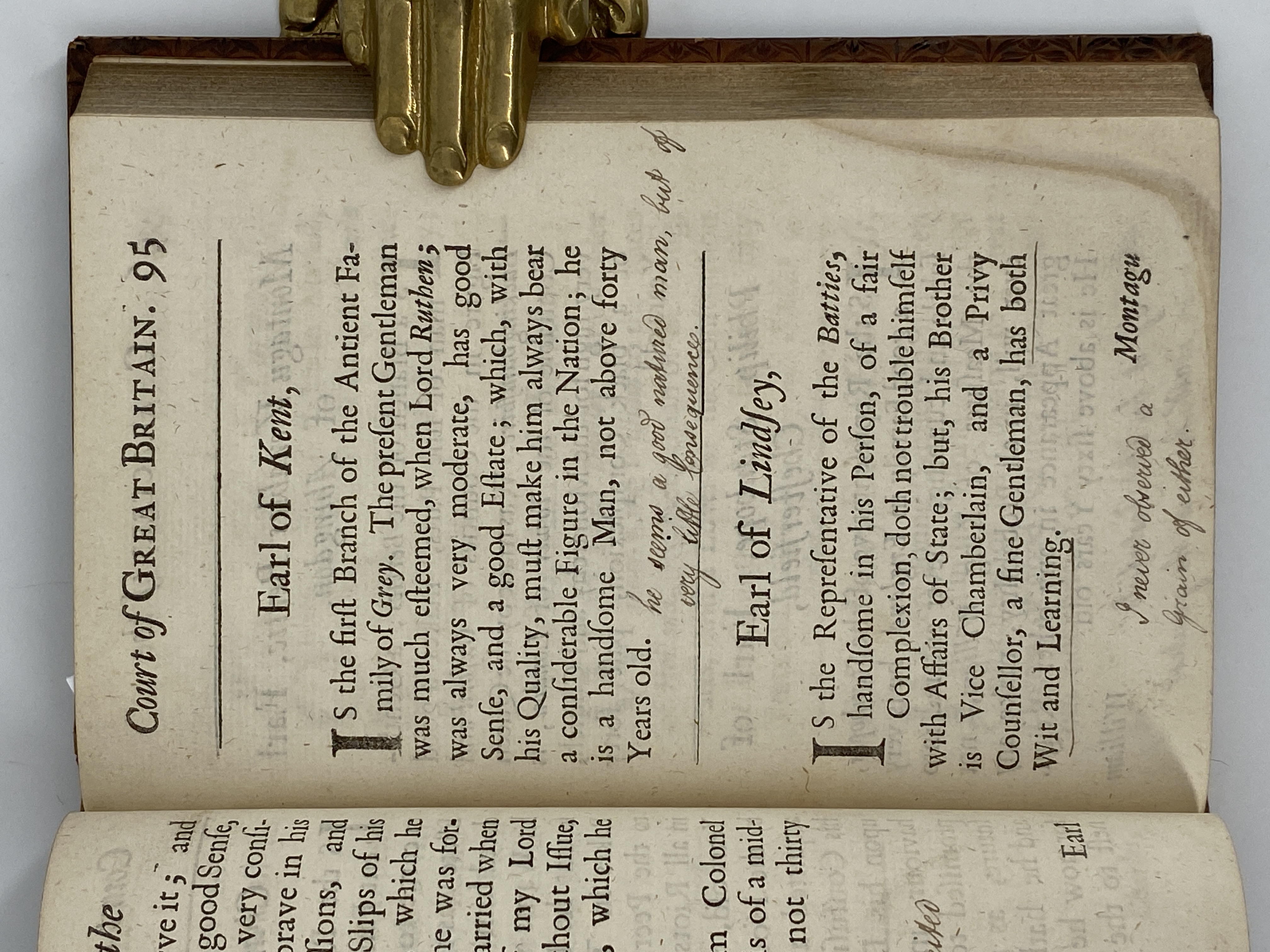
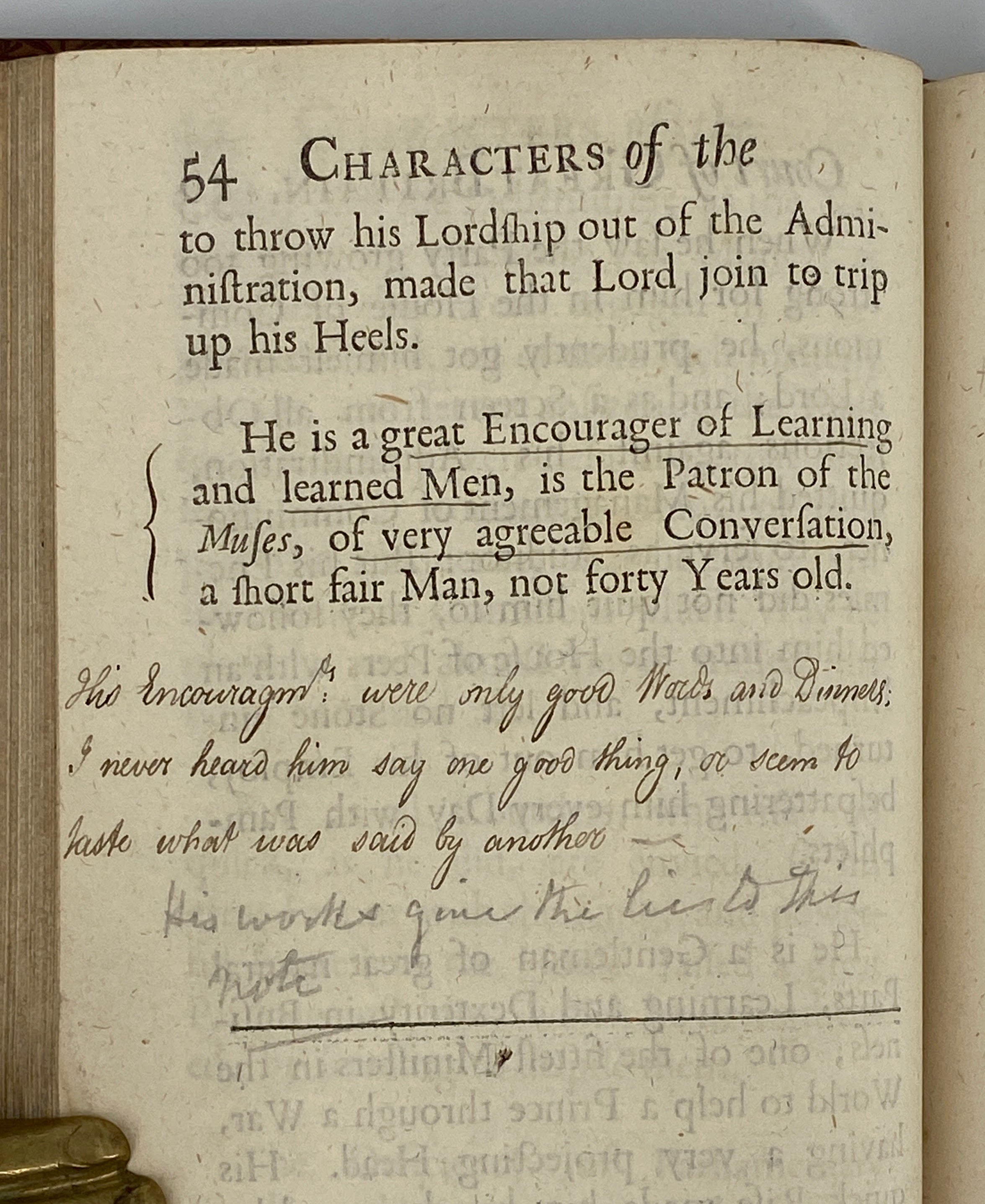
Swift’s annotations, transcribed throughout the text, are ribald and hilarious. Charles Fitzroy is ‘almost a slobberer’. John, Lord Somers, ‘very mean, his father was a noted Rogue’. Occasionally one of the later owners has annotated the annotation (54). Another of Mackay’s characters is dimissed as ‘great a Dunce as ever I knew’ and still another ‘As arrant a scoundrel as his Brother’. In relation to John Duke of Sutherland, the usual reading ‘A Blundering rattlepated drunken Sot’ becomes ‘A Blundering rattle pated drunken Scot’. Take your pick.
Several annotated examples of this book are known to exist: one passed through Sotheby’s in 1980 and is now at Yale; another is at the V&A. They seem to stem from a couple of original copyists of Swift’s own volume: a Mr Ritson and, as here, John Putland, his Surgeon, who is regarded as the more reliable source. The existence of these labour intensive 18th century works of homage to Dean Swift are testimony to the potency of his posthumous reputation.