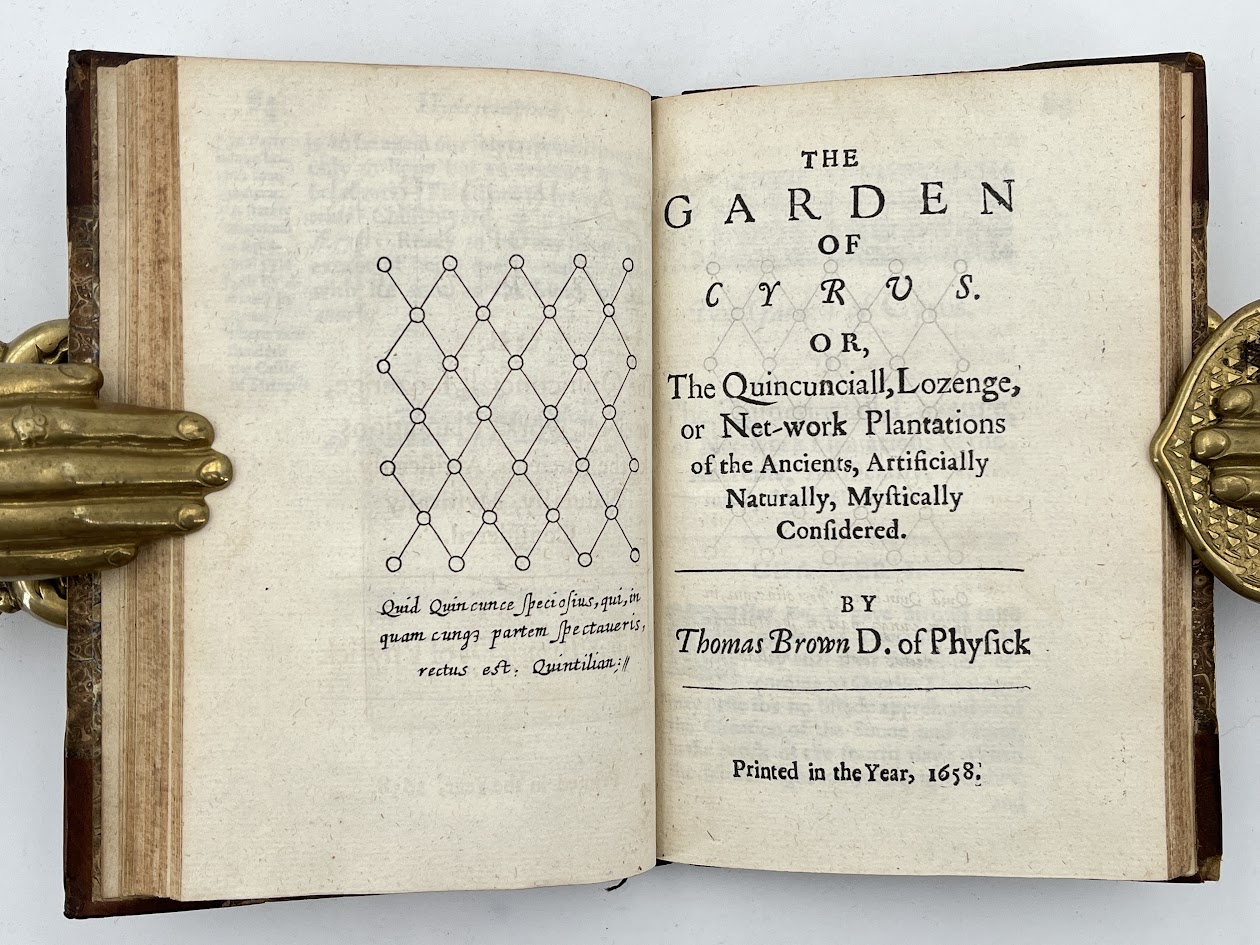
A lovely copy of Thomas Browne’s major literary contribution to Hermetic Wisdom in his discourse on the Quincunx which appears in this first edition, following on from his meditation on death, dying and the human quest for immortality, or Urn Burial with which the book begins.
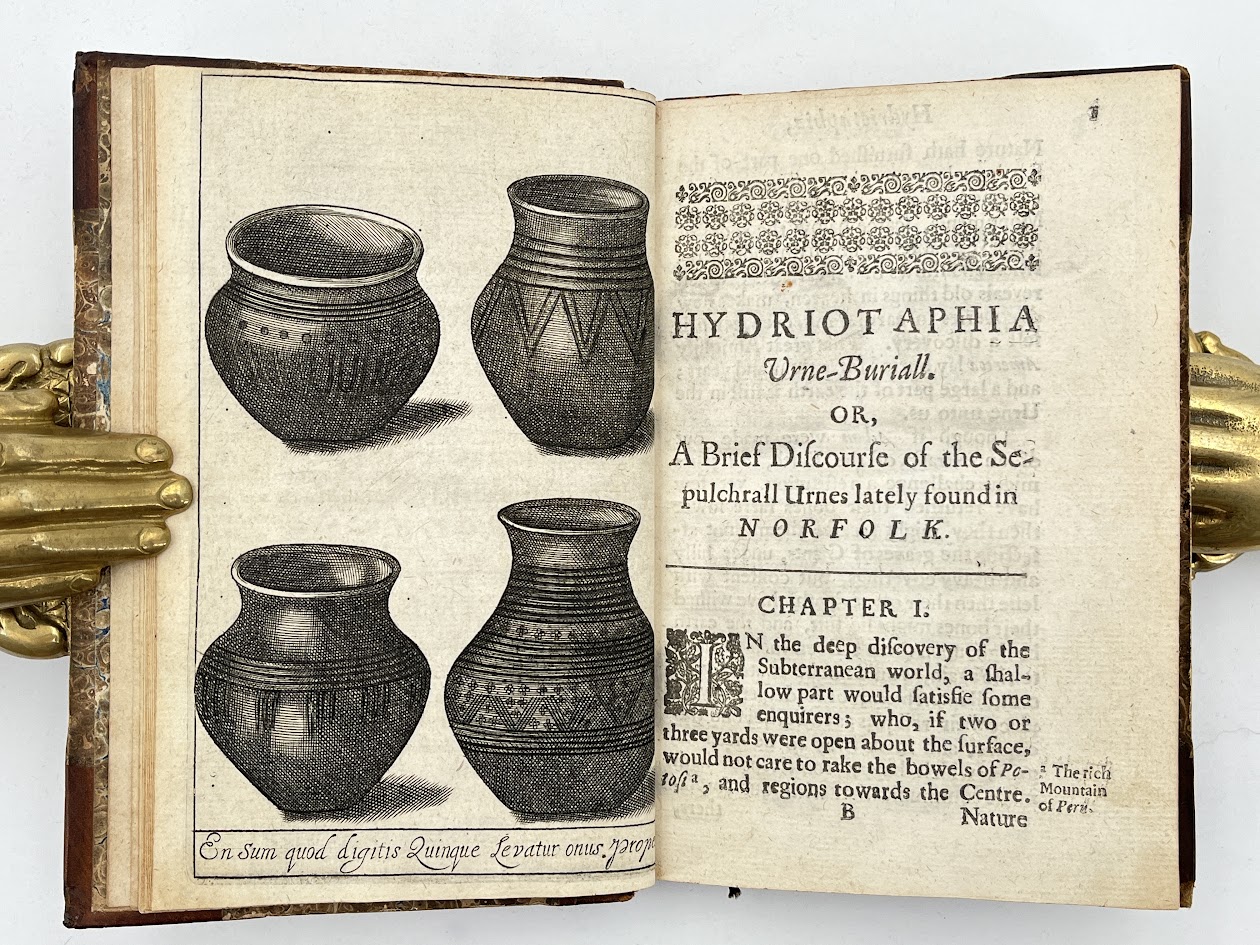
Hydriotaphia is one of the earliest English archaeological monographs, being inspired by the discovery of Saxon burial urns in his native Norfolk - Browne tentatively ascribes them to the Roman period. In truth the text is as much enjoyed for its ‘wit and solemn music’ as its factual content. The Garden of Cyrus is Browne’s contribution to a boom period in esoterica in the late 1650s in England. Pleasingly, the book has provenance to an unnamed 17th century annotator; a 19th century Cambridge Professor of Divinity and a 20th century book designer and bibliophile.
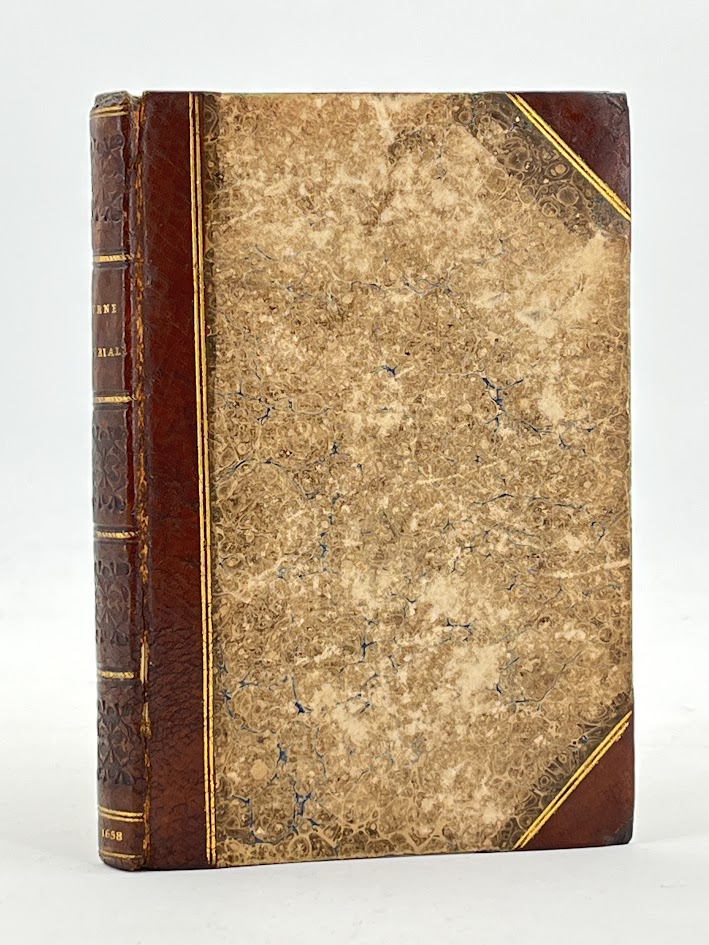
DESCRIPTION: Small octavo bound in 19th century half calf over marbled boards; title and date in gilt to spine. Both hinges tender especially the lower hinge. Brown marbled endpapers. Ownership signature of ‘J A Jeremie Trin. Coll. Cant’ - James A Jeremie, Regius Professor of Divinity at the University of Cambridge from 1850 - with three lines of his notes below, referring to Sextus Empiricus etc and brief additional notes in his hand on the final blank.
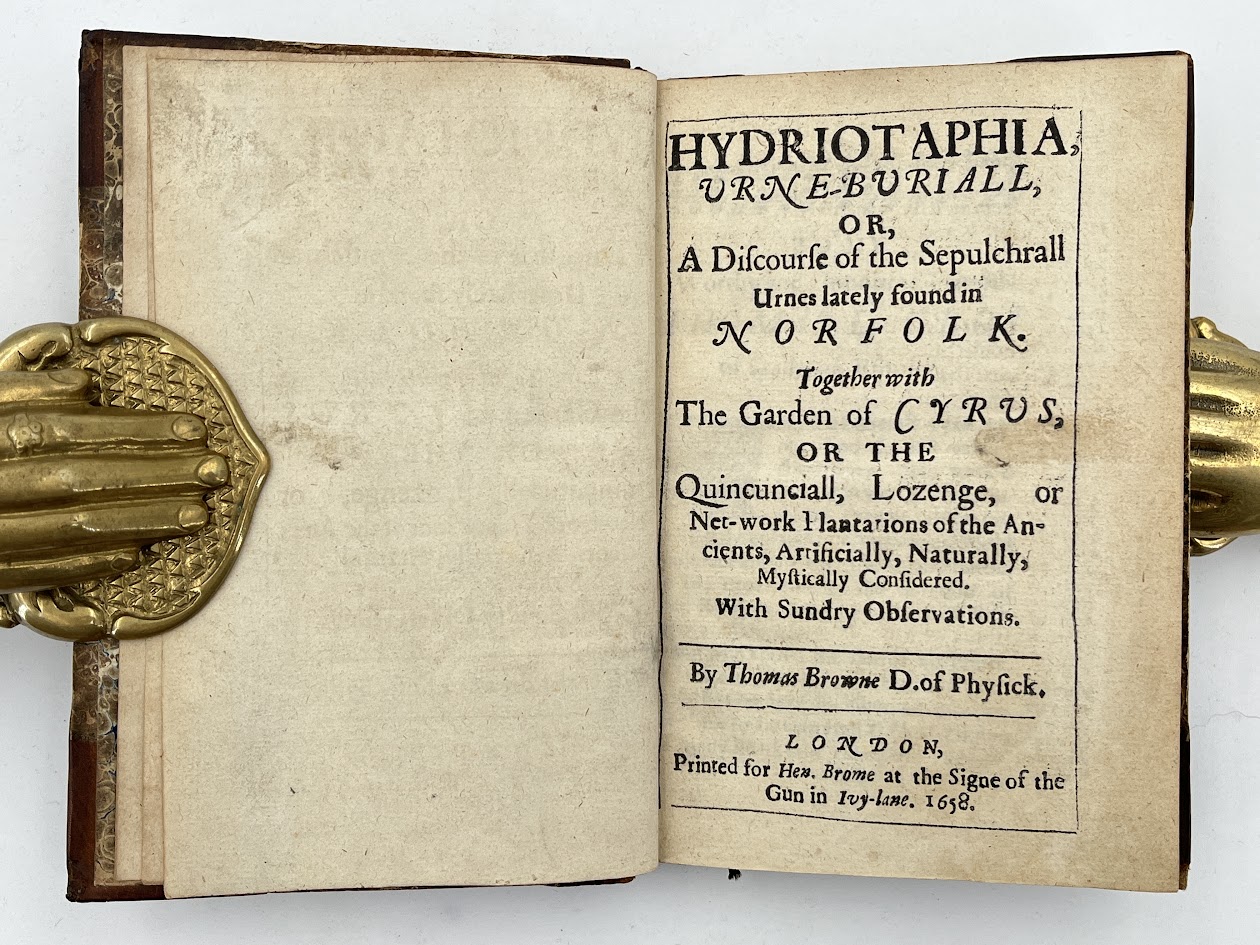
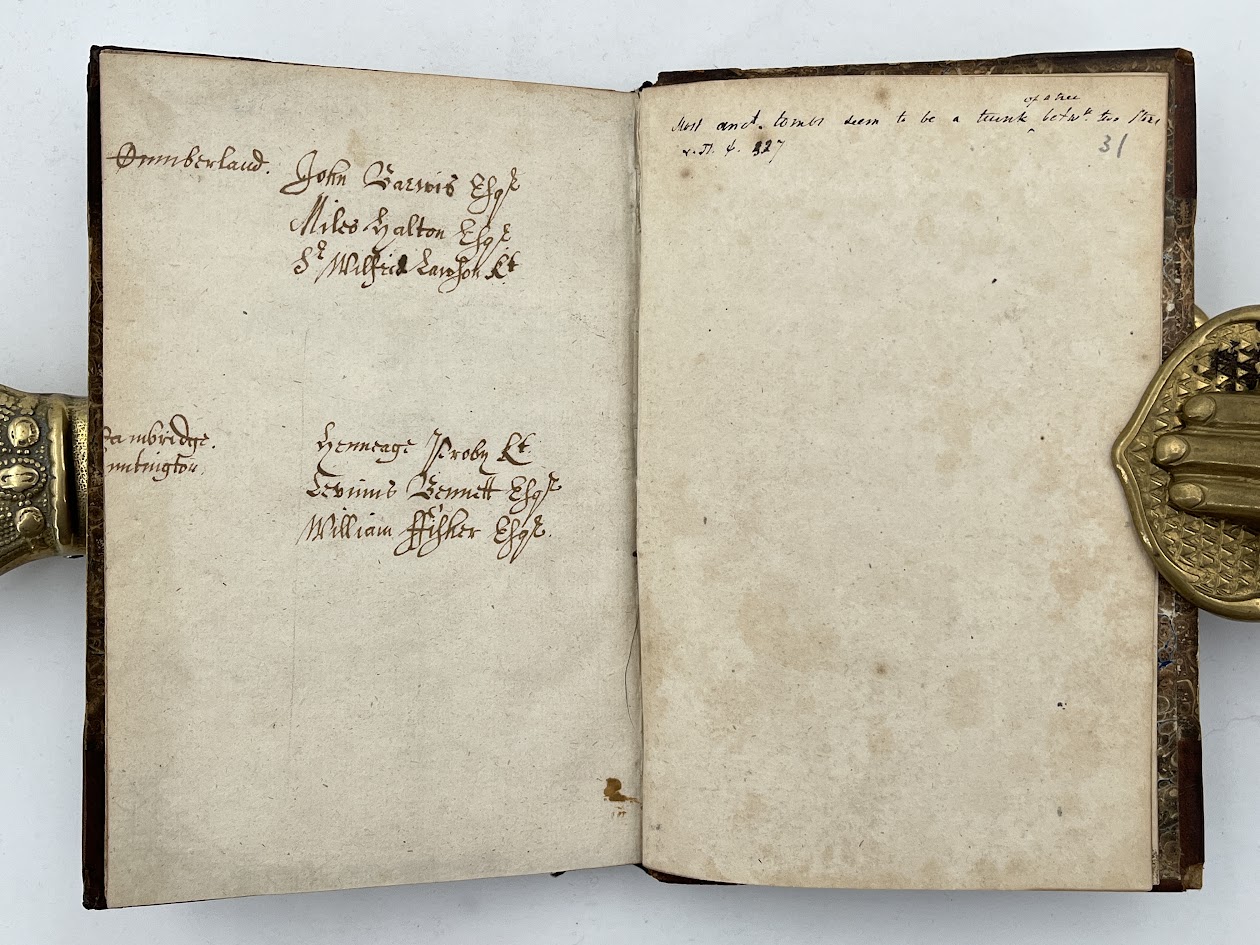
Book label of David and Hermione Chambers loosely laid in. Collates pp202 [6] with two full page plates and separate title page for The Garden of Cyrus. Concludes with the longitudinal title page. No errata which Keynes states as present in a minority of copies. A 17th century reader has made a few notes on the verso of the blank which follows the longitudinal title page. Written in a hand with several letter forms deriving from Elizabethan secretary, the note taker has recorded the names of several sheriffs and gentry figures of the mid 17th century from Cumberland - Miles Halton, Sir Wilfrid Lawson - and Cambridge/ Huntington - William Ffisher, Heneage Proby etc.
R202039; Keynes 93